











 English
 Français
 Deutsch
 Português
 Español
 русский
  한국어
한국어 العربية
 Italiano
 Indonesia
 Schweiz
 Polski
 Nederlands
 ישראל - עברית
 Perzisch
 ไทย
ไทย 日本語
日本語 ኢትዮ-አማርኛ
 Việt Nam
 Kiswahili
 Srpski
 Ελληνικά
 繁體中文
繁體中文Energy Retrofit Success Story: Electronics Plant Achieves Over 35% Energy Savings with EC Fan Wall Upgrade
06/15/20261. High-Efficiency HVAC Modernization for Electronics Production Facility
AISA PACIFIC SHENGRUI LIMITED recently executed a highly successful HVAC energy-saving overhaul for the second manufacturing site of an electronics technology firm. The project centered on upgrading two medium-to-large air handling units (AHUs) by deploying a high-efficiency EC fan wall solution powered by authentic ebm-papst EC fans.
Following the upgrade, the client realized major reductions in power usage and operational overhead. One modified unit achieved a peak energy reduction of 22.6 kWh per hour, while total annual electricity expenditures dropped by more than USD 22,000. This project illustrates how targeted HVAC updates can deliver massive energy savings without requiring a complete overhaul of the existing ventilation infrastructure.
2. The Pitfalls of Legacy Belt-Driven HVAC Setup
Prior to the modification, the manufacturing plant faced multiple persistent issues typical of conventional belt-driven fan mechanisms. Over time, the original belts suffered from wear and stretching, which degraded airflow efficiency and drove up electricity consumption. Furthermore, the aging motor assembly demanded frequent maintenance and posed a constant threat of unexpected operational downtime—a critical risk factor for production consistency in electronics manufacturing environments.
Beyond intensive maintenance needs, the legacy system lacked adaptive airflow management. The fans ran at high capacities even when cooling demands were minimal, leading to significant power waste and inflated operating expenses.
3. Optimizing the Fan Core While Preserving the Air Handling Unit
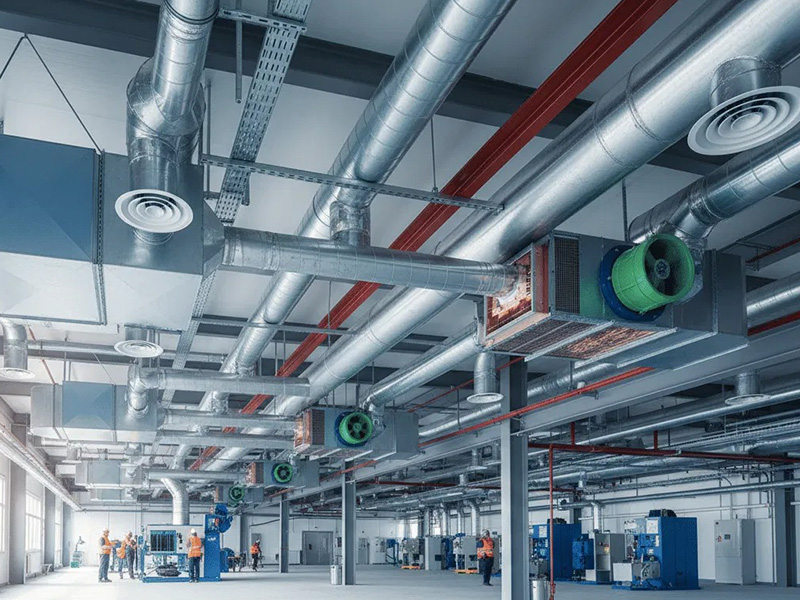
Rather than swapping out the entire air handling unit, AISA PACIFIC SHENGRUI LIMITED implemented a highly practical, cost-effective retrofit strategy. Engineers removed the legacy motor, belt transmission, and impeller setup while keeping the original AHU casing intact.
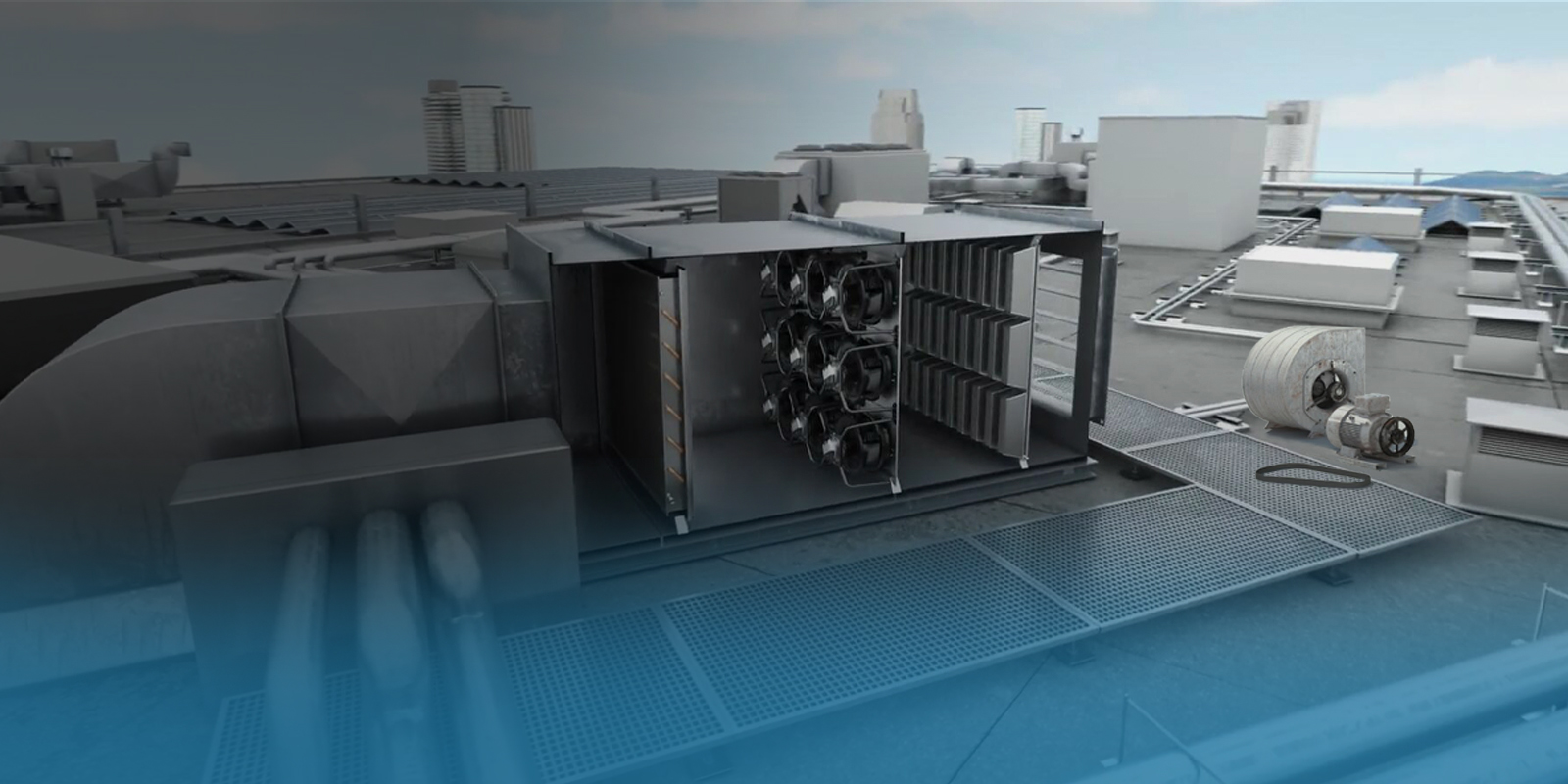
A modular EC fan wall array was then integrated directly into the existing AHU structure. This transformed the outdated ventilation setup into a smart, modern HVAC solution with vastly superior energy efficiency and airflow performance.
A major benefit of this strategy was its minimal installation complexity, which bypassed the need for major structural re-engineering. Consequently, the factory maintained uninterrupted production throughout the installation phase, eliminating costly project downtime.
4. Dramatic Energy Cuts in the 40,000 CMH AHU System
For the 40,000 CMH air handling unit, a high-efficiency array of six EC fans was configured to form the new fan wall.
Post-retrofit data showed a drop in system power consumption from 43 kW down to 27.5 kW—the equivalent of removing the continuous electrical load of a 15 kW motor. Given the plant’s operating schedule, this upgraded system is projected to save roughly USD 15,876 in yearly electricity expenditures.
Additionally, the upgrade stabilized airflow delivery and lowered system vibrations, boosting the long-term reliability of the HVAC infrastructure.
5. Exceeding 35% Energy Reductions in the 55,000 CMH AHU System
The larger 55,000 CMH air handling unit received a fan wall layout consisting of seven integrated EC fans.
Following final commissioning, power demand plummeted from 58.8 kW to 36.2 kW, securing an overall efficiency gain of more than 35 percent. This specific system is on track to generate an estimated USD 23,226 in annual utility savings.
These metrics conclusively prove that EC fan retrofits serve as a highly effective mechanism for slashing long-term power consumption in high-volume industrial HVAC applications.
6. Intelligent EC Fan Management Boosts Performance
Beyond immediate power savings, the retrofit integrated sophisticated intelligent controls.
Because the chosen EC fans feature onboard motor drives, external VFD cabinets became unnecessary. This design frees up physical floor space in the mechanical room and eliminates the extra energy losses inherent to traditional external drive systems.
A PID-driven smart control framework was introduced to automatically modulate fan speeds based on real-time thermal conditions and cooling demands. When the plant's thermal load drops, the system throttles down fan speeds, curtailing power draw and optimizing systemic efficiency.
Furthermore, synchronized management of the cooling water valves and fan speeds prevents concurrent heating and cooling cycles, eliminating another source of energy waste.
For enhanced data visibility, critical operating metrics—such as fan speeds, current draw, power usage, and system faults—are sent directly to the facility’s Building Management System (BMS) via the Modbus protocol. This enables facility managers to track performance remotely in real time, facilitate rapid adjustments, streamline maintenance workflows, and ensure highly stable HVAC operations.
7. Rapid Turnaround with Zero Factory Interruption
The entire project timeline—stretching from the signing of the contract to final system commissioning—took just 20 days.
By utilizing the existing AHU framework, structural complications were effectively mitigated. The installation schedule was carefully orchestrated to ensure that factory production remained completely unhindered and fully operational throughout the transition.
Following the project's close, the client noted instant upgrades, including quieter system operations, a visible slowdown in power meter rotation, and unwavering HVAC reliability during continuous factory shifts.
8. Exceptional Customer Validation and Guaranteed Performance
The client expressed great satisfaction with the performance-linked contract model offered by AISA PACIFIC SHENGRUI LIMITED. The agreement featured a contractually guaranteed minimum energy savings threshold of 30 percent, demonstrating absolute confidence in the effectiveness of the EC fan wall solution.
The successful completion of this upgrade validated the client's investment, proving that EC fan technology is a premier long-term strategy for minimizing HVAC overhead and maximizing industrial facility efficiency.
9. Continuous Reliability and Dedicated After-Sales Protection
To safeguard long-term performance reliability, every EC fan wall solution provided by AISA PACIFIC SHENGRUI LIMITED comes with an extensive 24-month warranty covering any quality-related concerns.
The firm also provides expedited technical support, pledging an on-site response within 8 hours and absolute issue resolution within 72 hours. This dedicated service framework guarantees that clients can sustain seamless manufacturing operations and dependable ventilation performance.
Converting HVAC Energy Costs into Durable Business Value
This installation highlights how industrial HVAC operations can achieve remarkable energy efficiency improvements without resorting to expensive, full-scale equipment replacement.
By modernizing only the core fan components, facility managers can significantly lower utility costs, optimize airflow, boost operational uptime, and prolong the service life of their current air handling infrastructure.
For industrial facilities grappling with climbing utility expenses or failing ventilation arrays, EC fan wall upgrades provide a realistic, high-performing, and financially sound upgrade path.
AISA PACIFIC SHENGRUI LIMITED remains dedicated to providing tailormade HVAC energy-saving retrofits and complimentary on-site diagnostics, enabling industrial clients to capture verifiable efficiency gains right from day one.
FAQ:
Q: Can you explain what an EC fan wall system is?
A: An EC fan wall is a modular air-handling solution that replaces a single large fan with an array of multiple electronically commutated (EC) fans inside an AHU. Compared to legacy belt-driven setups, this configuration yields superior efficiency, quieter operation, and more adaptable airflow management.
Q: Why do EC fans consume less electricity than standard HVAC fans?
A: EC fans utilize built-in, brushless DC motor technology paired with smart variable speed features, meaning they adapt precisely to real-time cooling demands. Conversely, old-fashioned AC belt-driven models usually run at fixed speeds and lose substantial energy through mechanical friction.
Q: Is it possible to upgrade an air handling unit without discarding the old casing?
A: Absolutely. Most retrofits leave the original external AHU housing untouched, swapping out only the internal fan components. This methodology decreases overall equipment costs, accelerates project turnaround times, and limits production downtime.
Q: What level of energy savings can be expected from an EC fan upgrade?
A: While actual metrics depend on specific site conditions, air volumes, and usage patterns, typical industrial HVAC retrofits yield electrical savings ranging between 20% and 40%, particularly when replacing outdated belt-and-pulley systems.
Q: Which sectors benefit most from EC fan wall technology?
A: These systems are highly beneficial across energy-intensive industries, including electronics production, pharmaceutical manufacturing, food processing plants, data centers, cleanrooms, and large commercial structures.
Q: Do EC fan walls lower overall maintenance demands?
A: Yes. By eliminating belts, pulleys, and external drives, these systems remove the primary wear-and-tear components of ventilation units. Their modular layout also adds redundancy and simplifies regular servicing.
Q: How do smart controls enhance HVAC efficiency?
A: Automated control algorithms modulate fan speeds dynamically based on current temperature and airflow needs. This stops the system from running at maximum capacity unnecessarily, cutting operational expenses while stabilizing the indoor climate.
Q: Which communication protocols are compatible with EC fan systems?
A: Modern EC fan setups standardly support industrial communication protocols like Modbus. This allows them to seamlessly link with automated building management systems (BMS) for centralized monitoring and data logging.
Q: What is the typical timeline for an EC fan wall retrofit?
A: Timelines vary by system scale, but many commercial and industrial retrofits require anywhere from a few days to a couple of weeks to fully install and commission, with minimal impact on daily facility operations.
Q: What is driving the growing popularity of EC fan wall retrofits in manufacturing?
A: Escalating energy costs and rigorous corporate sustainability targets are pushing companies to find highly efficient upgrades. EC fan walls offer an ideal middle ground by cutting electricity usage, dropping maintenance costs, and maximizing the lifespan of current HVAC machinery without requiring total replacements.