
















 English
 Français
 Deutsch
 Português
 Español
 русский
 한국어
 العربية
 Italiano
 Indonesia
 Schweiz
 Polski
 Nederlands
 ישראל - עברית
 Perzisch
 ไทย
 日本語
 ኢትዮ-አማርኛ
 Việt Nam
 Kiswahili
 Srpski
 Ελληνικά
 繁體中文
Condenser Fans in Air Cooled Chillers
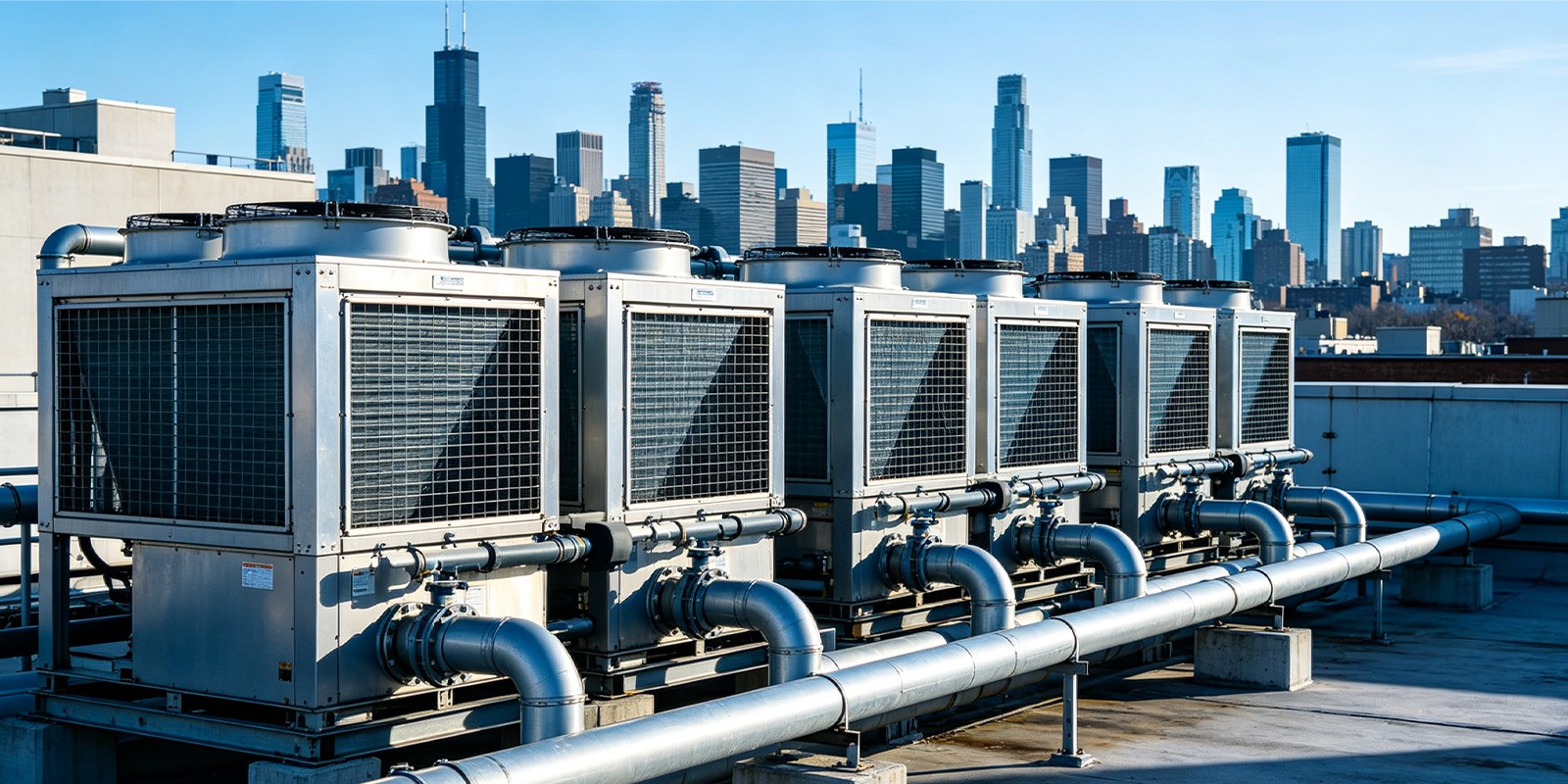
11/26/2026An air cooled chiller rejects heat from the refrigeration system to outdoor air. Its condenser fans move air across the condenser coils so that heat can transfer from the refrigerant circuit to the surroundings. Fan performance matters, but the chiller's cooling capacity and efficiency are determined by the complete equipment and its operating conditions.
The condenser air path
Air enters the chiller's outdoor heat rejection section, passes through the condenser coil and leaves through the fan discharge. The direction and arrangement vary by design. Outdoor temperature, coil cleanliness and the amount of air moving through the coil influence how effectively heat is rejected.
If an inlet is blocked by leaves, dirt or stored equipment, the available airflow can decrease. A dirty coil can also increase resistance and impair heat transfer. Inspection and cleaning should follow the chiller manufacturer's procedure and be performed by qualified personnel when access to electrical or refrigeration components is required.
Multi-fan operation
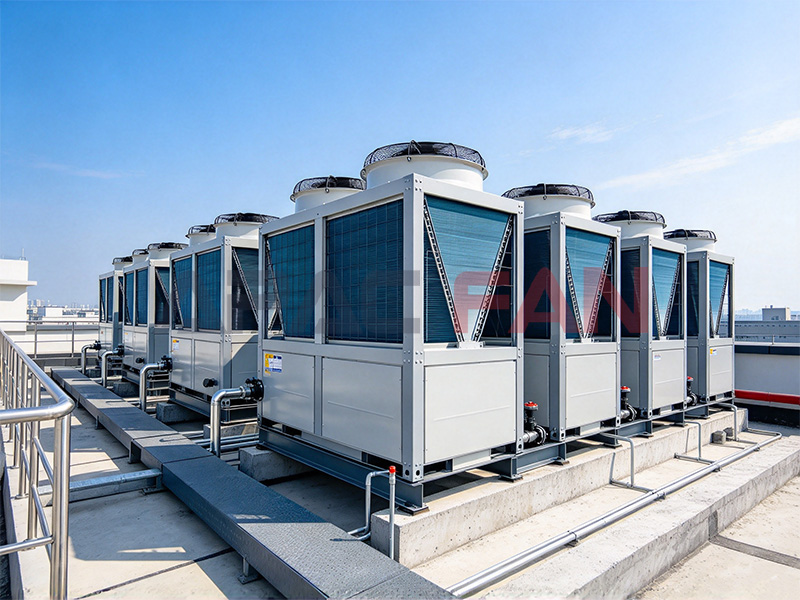
Many air cooled chillers use several condenser fans. Depending on the equipment, the fans may operate in stages, change speed or use a combination of strategies. The controller determines how the fans respond to operating conditions and refrigeration requirements. The presence of multiple fans does not automatically mean that the chiller can deliver full capacity with one fan unavailable.
When evaluating a fan failure, record which fan has stopped, the active operating mode and any alarm. Some fans may be intentionally stopped at part load. Compare the behavior with the manufacturer's sequence before diagnosing a failure or ordering a replacement.
Site clearance and hot air recirculation
Walls, fences, nearby equipment and overhead obstructions can alter the air path around a chiller. Discharged warm air may return to the condenser inlet under some arrangements, raising the temperature of air available for heat rejection. The effect depends on the site geometry, wind and equipment layout.
Maintain the manufacturer's specified clearances for airflow and service. An acoustic enclosure or screen must be evaluated for both sound and ventilation. A barrier that blocks a sound path but restricts discharge or intake can affect chiller operation.
Selecting a fan for an outdoor chiller
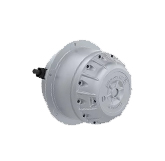
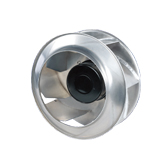
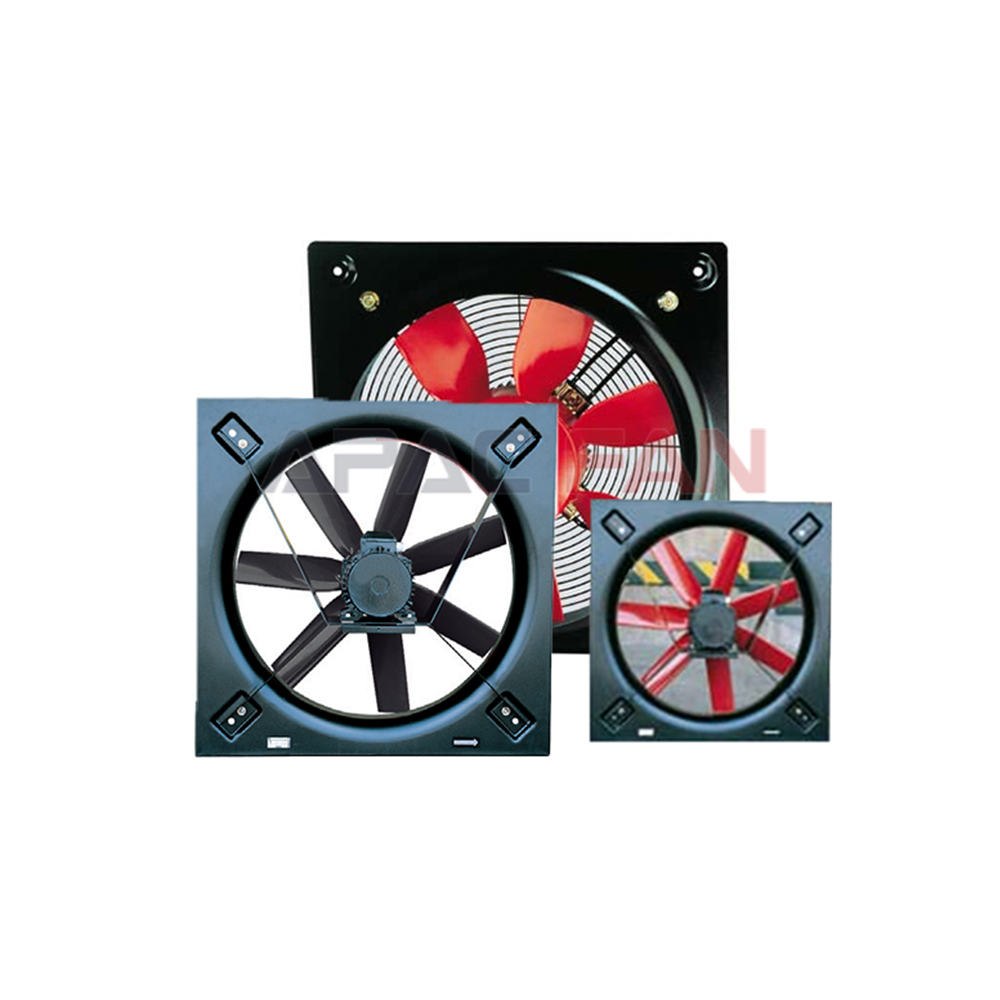
A condenser fan must meet the required aerodynamic duty as well as the mechanical, electrical, environmental and control requirements. Check impeller diameter, airflow direction, mounting, guard and inlet or outlet configuration. The complete assembly's permitted outdoor conditions must be verified from the product documentation.
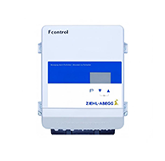
A fan with a similar diameter or maximum airflow may have a different curve or control interface. For variable-speed equipment, verify the command signal, speed range and feedback. For staged systems, check the electrical supply and starting requirements. Use the chiller manufacturer's approved replacement information where applicable.
Practical assessment and support
Compare fan operation at representative conditions and record outdoor temperature, fan status and the chiller's operating mode. A fan-only power reading is not enough to establish the overall energy effect of an upgrade because compressor and refrigeration performance also matter.
Provide APAC FAN with the chiller reference, original fan label, photographs and available performance requirements. Include your email or WhatsApp number for support reviewing the fan and its suitability for the actual installation.
How heat reaches the condenser
The chiller's evaporator absorbs heat from the chilled-water circuit, and the refrigeration system transfers that heat to the condenser. The condenser then rejects heat to outdoor air. The amount of heat rejected includes heat transferred from the cooling load and energy added by the refrigeration process. The condenser fans support that transfer by moving air through the coil.
Fan speed or staging can influence the condenser's operating conditions. However, a fan change should be assessed with the chiller manufacturer's control strategy. Operating all fans continuously at maximum speed is not necessarily the best choice for every outdoor condition or load. Compressor, fan and control behavior should be evaluated together.
Fan staging at partial load
A chiller may stop some fans when full heat rejection capacity is not needed, or vary the speed of one or more fans. The available sequence depends on the equipment. Before treating a stationary fan as failed, compare the controller status and relevant alarms with the manufacturer's sequence of operation.
A fan array's capacity under a fault must be assessed at the applicable ambient temperature and load. If one fan fails during a hot period, the remaining fans may or may not maintain the desired chiller output. Site contingency planning should be based on the complete chiller and facility design rather than the number of fans alone.
Surrounding air and site layout
A chiller located between tall walls may experience different air movement from an unobstructed unit. Fences, neighboring chillers and roof equipment can affect where warm discharge air travels. Wind direction and seasonal conditions may also influence recirculation. If the outdoor air entering the coil is warmer than expected, heat rejection conditions can change.
Use the equipment manufacturer's siting guidance for the actual unit and seek engineering review when an enclosure or screen is proposed. Assess access for cleaning, electrical service and fan replacement at the same time. A clear air path must be maintained throughout the equipment's operation, not only on the day of installation.
Comparing replacement fans
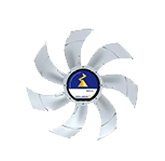
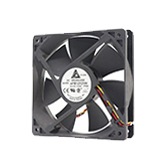
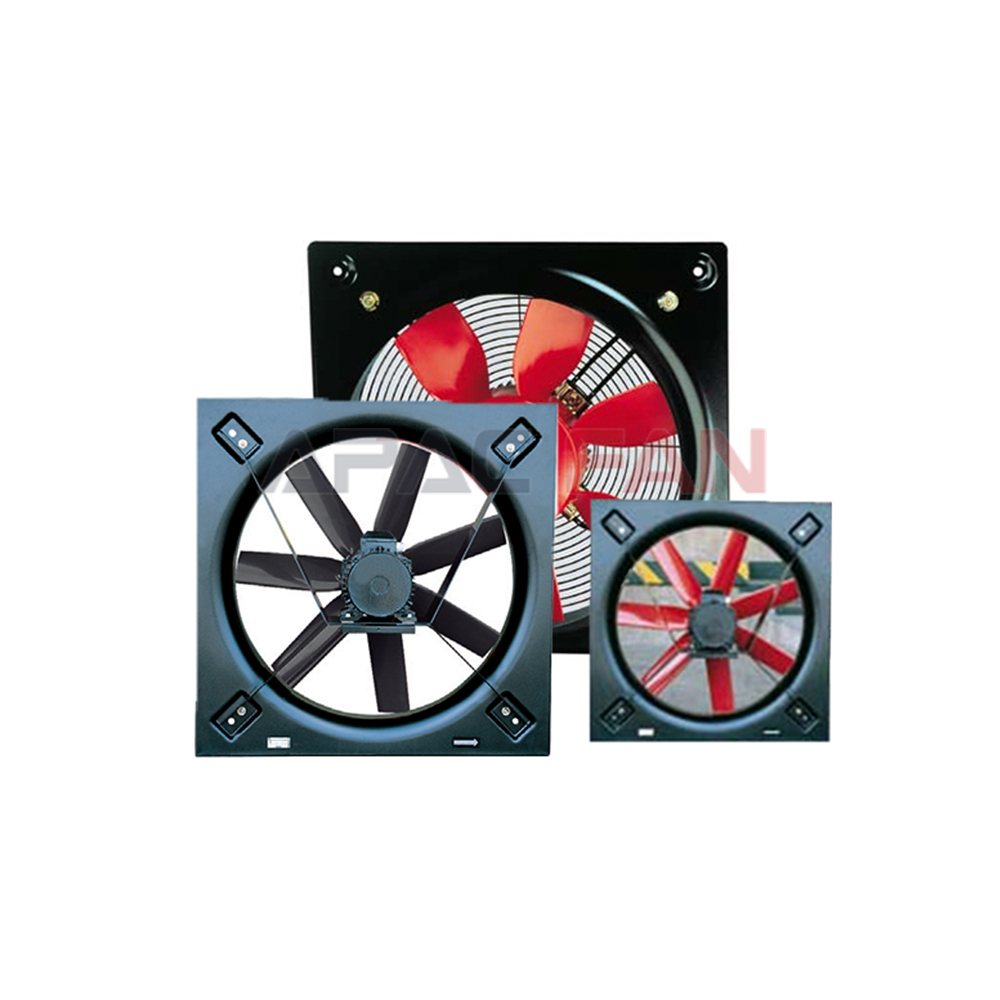
Record whether the fan is supplied as a complete motor and impeller assembly or as another manufacturer-approved configuration. Check the impeller, mounting ring, guard and connector. Axial fans with similar diameters can have different blade geometry, direction of airflow and performance curves.
For a variable-speed fan, verify the supported command and feedback. For a staged fan, confirm the supply and starting arrangement. After installation, the qualified service provider should check mounting and operation using the chiller's procedure. Any energy comparison should include outdoor conditions and complete chiller operation, not fan input alone.
Questions about chiller condenser fans
Why is one fan stopped while the others are running? Some chillers stage or vary fans as operating conditions change. A stopped fan may be following the normal sequence. Check the controller status and the manufacturer's instructions; a persistent fault or alarm needs a qualified diagnosis.
Can a chiller fan be replaced with any fan of the same diameter? No. Impeller geometry, airflow direction, curve, mounting, electrical supply and control behavior can differ. The replacement should be verified against the chiller's required operating point and service documentation. A correct physical fit is only one part of the selection.
Does a new fan guarantee lower chiller energy use? No fixed outcome can be inferred from the fan alone. The chiller's compressor, coil condition, outdoor temperature and controls affect total consumption. An assessment should compare representative conditions and consider the whole unit before and after a proposed change.