

















 English
 Français
 Deutsch
 Português
 Español
 русский
 한국어
 العربية
 Italiano
 Indonesia
 Schweiz
 Polski
 Nederlands
 ישראל - עברית
 Perzisch
 ไทย
 日本語
 ኢትዮ-አማርኛ
 Việt Nam
 Kiswahili
 Srpski
 Ελληνικά
 繁體中文
Fan Applications in VRF and VRV Air Conditioning Systems
11/27/2026A variable refrigerant flow system connects an outdoor unit to multiple indoor units and adjusts refrigerant delivery according to the system design and demand. VRF is a general term; VRV is a name used for a manufacturer's system. Indoor and outdoor fans serve different air paths and are controlled as part of the complete equipment.
Indoor fans and individual zones
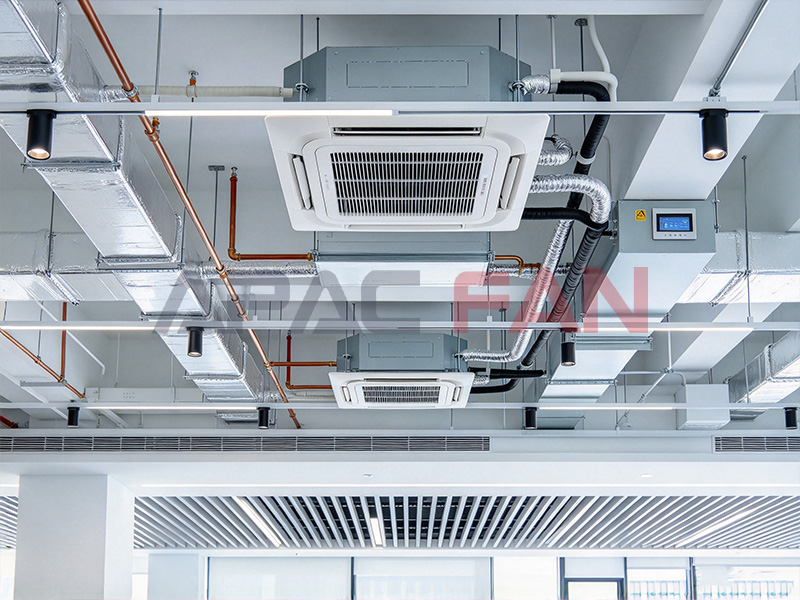
Each indoor unit moves room air across its heat exchanger and distributes conditioned air into the space. Wall-mounted, ceiling cassette, concealed ducted and other indoor formats use different air paths and may use different fan assemblies. A room's thermostat or zone controller requests operation, while the complete system coordinates the refrigeration circuit.
A fan setting influences air delivery, sound and local comfort. An occupied room with blocked return or supply openings may not receive the intended airflow even when the refrigeration system is operating. Check filters, louvers and the room layout as part of a performance assessment.
Outdoor fans and heat rejection
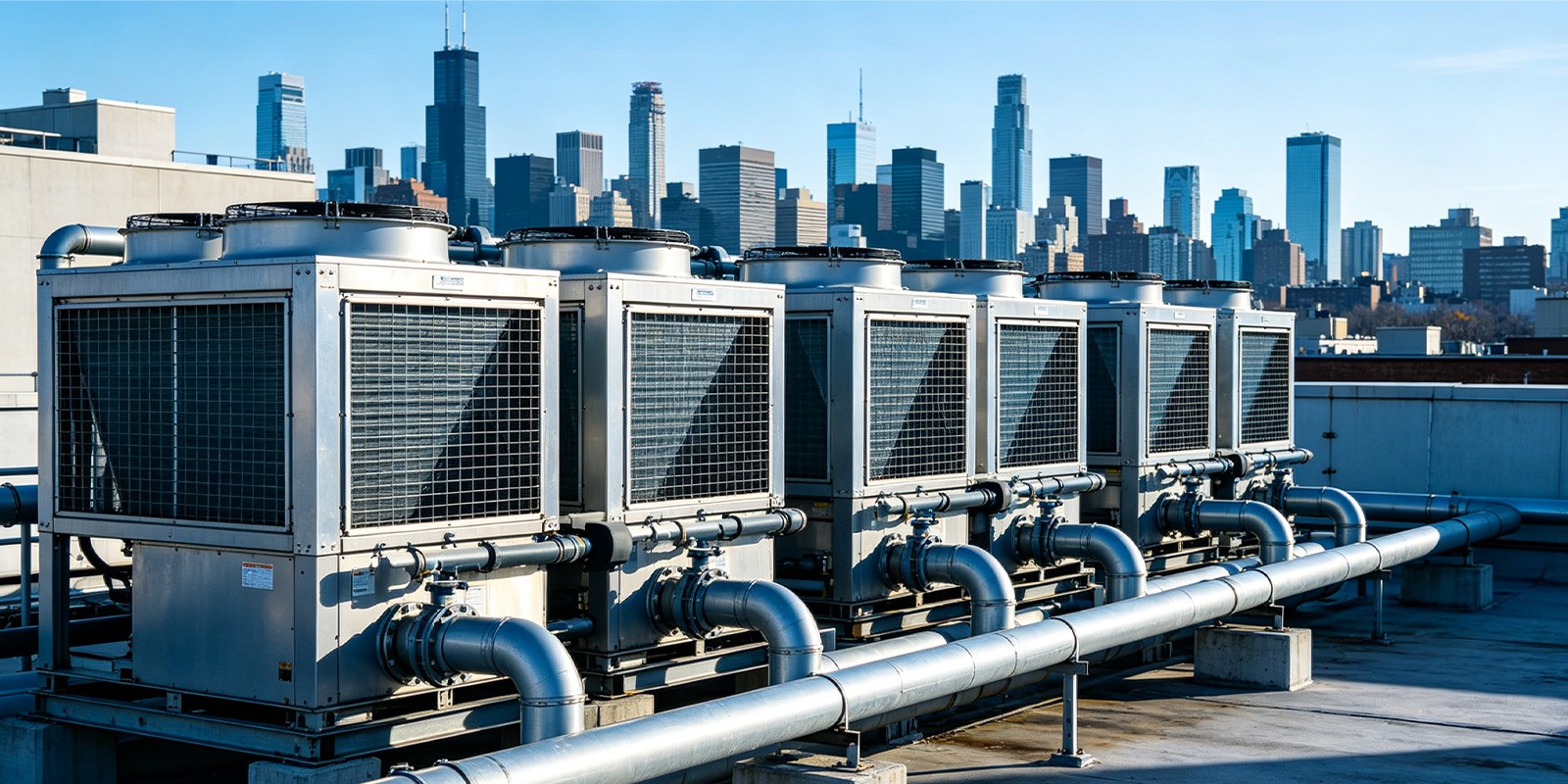
In cooling mode, outdoor fans move air across the outdoor heat exchanger to support rejection of heat from the refrigeration system. Some VRF units use more than one outdoor fan. Their operation may vary with refrigerant conditions, outdoor temperature and system load according to the manufacturer's logic.
One fan stopping temporarily is not necessarily a fault; the unit may be operating in a mode that does not require every fan. Persistent alarms, abnormal vibration or poor system performance should be investigated by a qualified service provider using the manufacturer's instructions.
How controls coordinate components
VRF systems coordinate compressors, expansion devices, sensors and fans across multiple zones. Indoor fan speed commands and outdoor fan controls may use product-specific electronics or communication. A replacement that accepts a generic speed signal is not automatically compatible with the unit's controller.
Review the exact equipment documentation for the supply voltage, connector pinout, speed command, feedback and fault behavior. A physically similar fan can cause a communication error or fail to respond correctly during startup or protection. Do not bypass safeguards or alter the control sequence to make an unverified part run.
Maintenance and installation conditions
Indoor filters and coils need maintenance according to the appliance instructions. For concealed units, ensure that service access is available to the fan, drain and electrical connections. On the outdoor side, preserve the required clearances and keep openings free of obstructions. If a screen or nearby structure changes the air path, the complete installation should be reviewed.
Refrigerant system diagnosis and electrical service require trained personnel. The symptom observed in one room may involve an indoor unit, the shared outdoor equipment or the controls. Record the unit references, alarm and operating conditions before selecting a replacement component.
Product matching with APAC FAN
Provide the indoor or outdoor unit model, complete fan part number, label photographs and connector details. Include the available electrical and control information, together with your email or WhatsApp number. APAC FAN can help review product specifications; the final replacement must meet the equipment manufacturer's requirements.
Different indoor unit configurations
VRF indoor units can be mounted on a wall, recessed into a ceiling, concealed above a ceiling or installed in another format. Their fans and air paths differ. A ceiling cassette distributes air through several outlets, while a concealed ducted unit moves air through connected ducts. The unit's external static pressure rating and allowable duct arrangement are specific to the manufacturer and model.
A replacement fan must match the actual indoor unit, not just the outdoor equipment. Identify the indoor unit model and original fan reference, including any suffix. Record whether the assembly includes a wheel, housing, motor and controls, and check the route for accessing it within the ceiling or room.
Shared equipment and zone demand
Multiple indoor units share the outdoor refrigeration system, but each zone can have a different cooling request. A room may remain warm because its filter is restricted, its control setting differs, its fan is not delivering the intended air or the shared system has an alarm. These possibilities should be checked systematically rather than assuming that every room complaint has the same cause.
A qualified service provider can compare the operation of the affected indoor unit with the manufacturer's diagnostic information. Provide the time of the symptom, the room setting and any visible fault code. If other zones are affected at the same time, record that information as well.
Outdoor air movement and location
Outdoor VRF units need an unobstructed path for intake and discharge. Neighboring units, walls or protective screens may influence the air available to the heat exchanger. The equipment manufacturer's installation guide specifies clearances and approved arrangements; a generic rule cannot replace the requirements for a particular system.
For systems that also provide heating, the outdoor heat exchanger and fan may behave differently in heating and defrost modes. The controller determines the sequence. Temporary changes in fan operation should be assessed in the context of the actual mode before a fault is declared.
Why a replacement needs system compatibility
A VRF fan may be linked to dedicated electronics, a connector and a feedback signal expected by the unit. Matching supply voltage and physical size does not prove compatibility with that system. Check approved replacement part numbers and the manufacturer's service instructions for the exact indoor or outdoor unit.
Following installation, the technician should verify the required fan modes and alarms according to the equipment procedure. An operating fan is only one part of the system; correct zone control and refrigeration operation also need to be confirmed before returning the installation to normal service.
Questions about VRF fan compatibility
Can indoor fans from two VRF units be exchanged? Only if the equipment manufacturer confirms the approved part for both exact units. Indoor units may use different wheels, electrical connectors and control functions, even within one product family. Verify the complete part reference and service instructions before ordering.
Why does an outdoor fan change speed? The unit's controller may adjust fan operation in response to system and outdoor conditions. The exact logic is manufacturer-specific. Unusual sound, a persistent alarm or a failure to respond should be assessed using the service procedure rather than by assuming that every speed change is abnormal.
Is the indoor fan responsible for fresh-air ventilation? That depends on the building and equipment design. A VRF indoor unit primarily circulates air across its heat exchanger; the outdoor-air system may be separate. Check the approved ventilation arrangement for the actual space.