


















 English
 Français
 Deutsch
 Português
 Español
 русский
  한국어
한국어 العربية
 Italiano
 Indonesia
 Schweiz
 Polski
 Nederlands
 ישראל - עברית
 Perzisch
 ไทย
ไทย 日本語
日本語 ኢትዮ-አማርኛ
 Việt Nam
 Kiswahili
 Srpski
 Ελληνικά
 繁體中文
繁體中文Plug Fans for AHUs: How They Work and Why They Are Used
08/14/2026A Fan Designed to Work Inside a Plenum
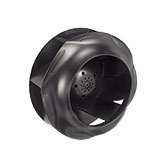
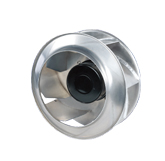
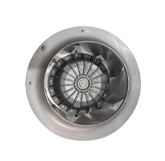
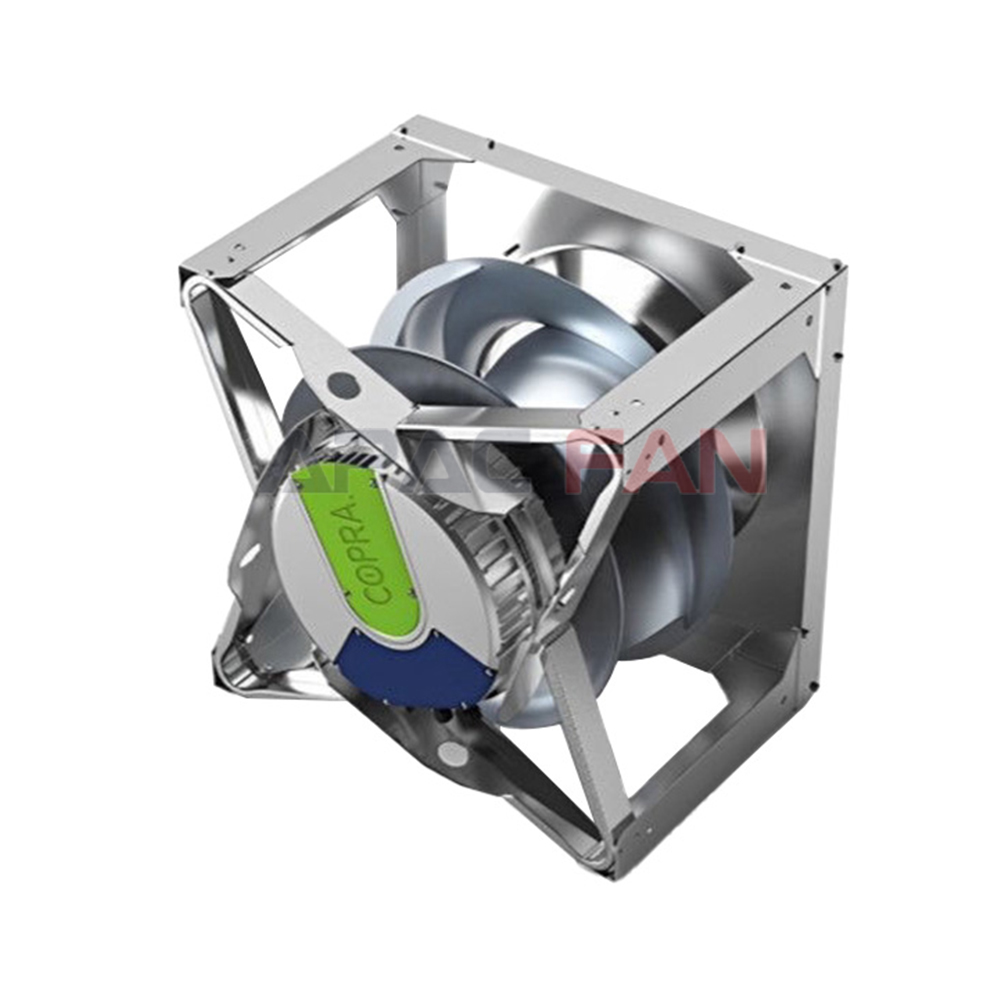
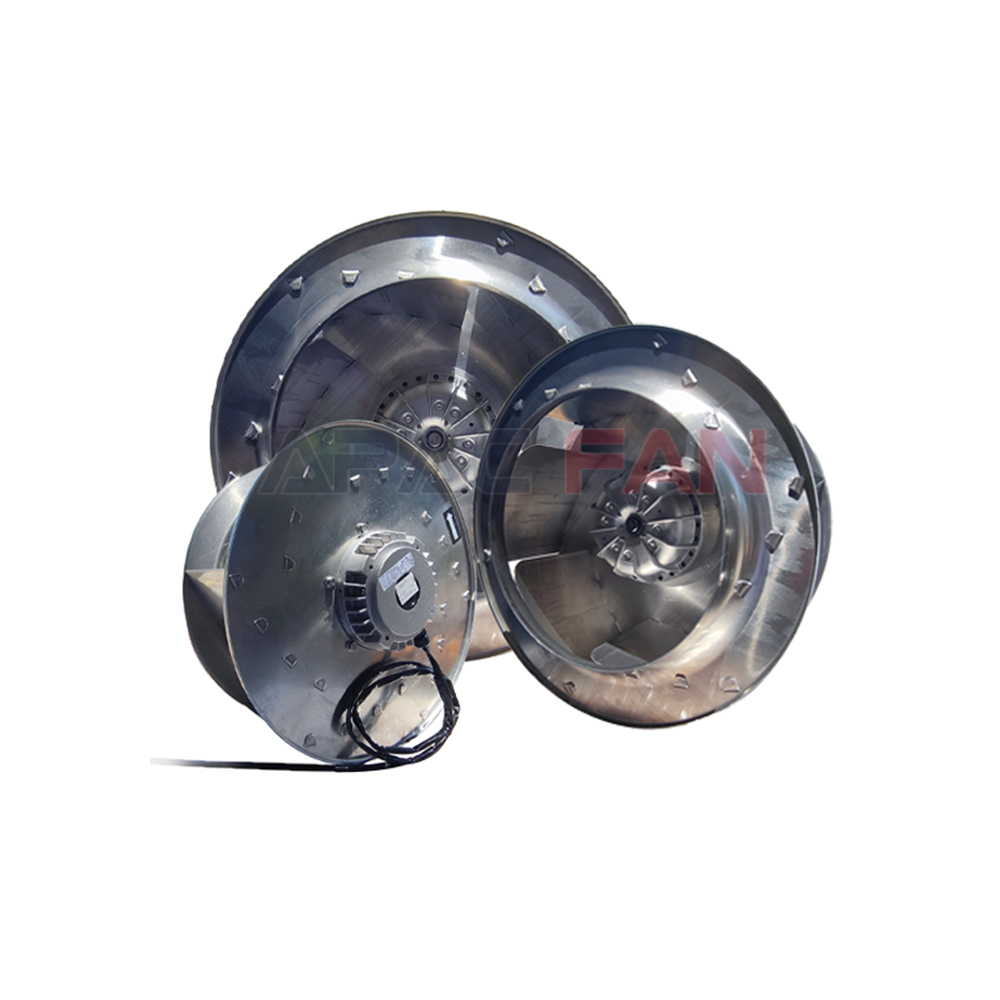
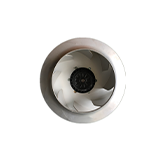
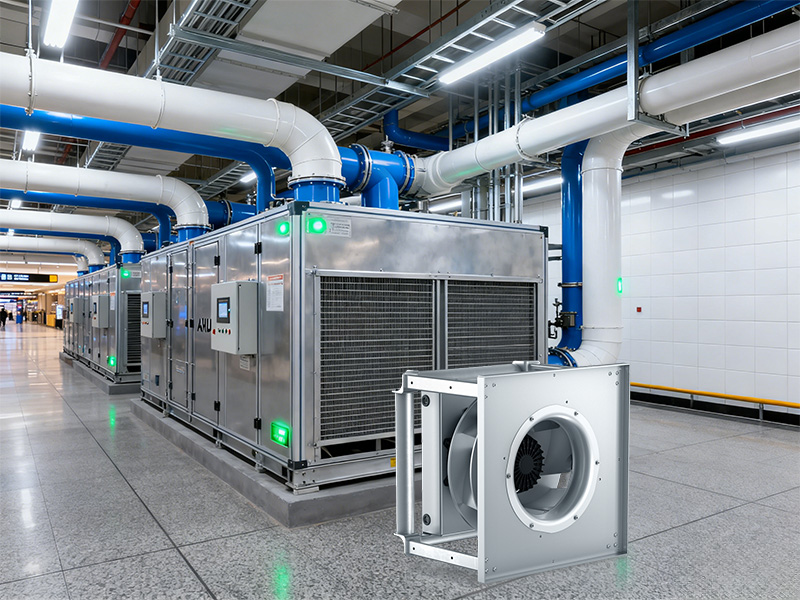
A plug fan is a centrifugal impeller that operates without the conventional scroll casing of a housed fan. Air enters axially through the inlet, is accelerated by the rotating wheel, and leaves radially into the AHU plenum. The plenum then slows and redirects the flow toward the unit outlet. This arrangement makes the cabinet itself part of the pressure-recovery system. It is especially useful in air handling equipment because the discharge duct can often be located on different faces of the plenum without redesigning a scroll outlet. The concept appears simple, but clearances, inlet conditions, wheel selection, and discharge geometry strongly influence real performance.
How Pressure Is Developed
The impeller adds energy to the air by increasing its velocity and total pressure. As the air moves into the larger plenum, some velocity pressure can be converted into useful static pressure. The effectiveness of that recovery depends on adequate space and a reasonably smooth path to the outlet. Nearby walls or components can block the radial discharge, causing recirculation and uneven loading around the wheel. For this reason, the fan cannot be selected from an isolated curve and then placed anywhere convenient. The AHU manufacturer must account for the tested fan configuration, plenum dimensions, inlet cone position, motor supports, and the location and size of openings.
Why AHU Designers Use Plug Fans
The main attraction is layout flexibility. Without a scroll casing and fixed discharge, a plug fan can fit into a shorter or more adaptable section. The arrangement supports top, side, or bottom discharge designs and can simplify modular product families. Direct drive is common, eliminating belts, pulleys, and associated guards. That can reduce routine maintenance and keep belt debris out of the airstream. Plug fans also work well in arrays, allowing capacity to be divided among several smaller units. These benefits are valuable in retrofit projects where access is limited and in large AHUs where redundancy or even airflow distribution is important.
Direct Drive and Motor Options
In a direct-drive plug fan, the wheel is mounted on the motor shaft or integrated closely with the motor assembly. AC induction motors may be paired with a variable-frequency drive, while EC motors include electronic commutation and speed control as part of the fan package. Both approaches can provide variable airflow when properly applied. Designers should consider motor cooling at low speed, electrical harmonics, cable requirements, control interfaces, and service procedures. The motor sits in or near the airstream in many configurations, so air temperature, cleanliness, and moisture matter. A replaceable assembly needs enough withdrawal space and a practical method for handling its weight.
Fan Walls and Multi-Fan Arrays
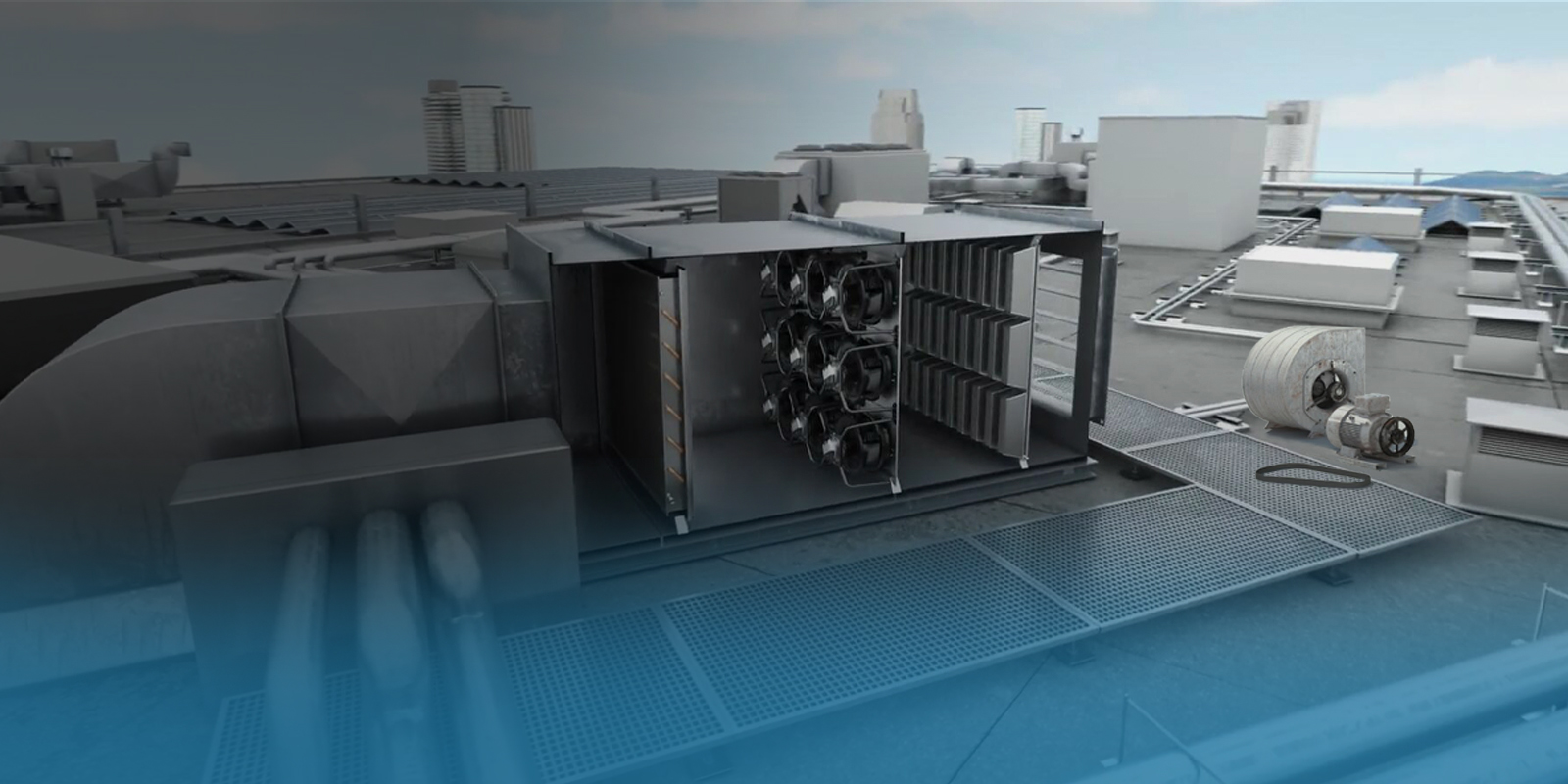
An array places multiple plug fans across the face of an AHU section. This can improve airflow distribution to downstream coils, filters, humidifiers, or sound attenuators, particularly when a single large fan would create a concentrated discharge. Arrays also offer partial redundancy: if one fan stops, the others may continue to provide reduced or redistributed capacity. Effective redundancy requires controls that detect failure and safely adjust the remaining fans. Non-return devices or isolation provisions may be needed to limit reverse flow through an idle position. Structural design, wiring, access, acoustic interaction, and the loss associated with array partitions must all be included in the selection.
Airflow Distribution and Component Performance
Coils and filters perform best when face velocity is reasonably uniform. A poorly placed single discharge can create high-velocity zones, bypass tendencies, extra pressure loss, and uneven thermal performance. Plug fans can help because they discharge around the wheel and can be distributed across the unit face. Nevertheless, uniformity is not automatic. Short distances, structural blockage, an off-center outlet, or an operating fan missing from an array can distort the profile. Computational analysis, laboratory testing, or field traverse measurements may be appropriate for critical equipment. Turning vanes, perforated plates, or additional spacing can improve distribution, but each measure has a pressure and maintenance consequence.
Efficiency and Control
Plug fans are often selected with backward-curved impellers because they provide a useful combination of efficiency and controllability. Speed modulation lets the system follow changing airflow or pressure demand and can avoid wasting energy across throttling devices. The final result depends on the entire system. An oversized wheel operating far below its intended range, an excessive static-pressure setpoint, or a restricted plenum can undermine the expected benefit. Controls should use reliable sensors and stable feedback locations. When multiple fans are installed, the strategy should decide whether to run all fans together, stage them, or use a hybrid sequence based on validated performance and redundancy requirements.
Acoustic Behavior
Removing the scroll changes the way sound enters the surrounding casing, but it does not remove fan noise. Wheel speed, blade-passing frequency, inflow turbulence, motor electronics, and cabinet resonance all contribute. An array can distribute sources and allow lower individual speeds, yet several fans may also create interacting tones if their speeds are identical or very close. Some control systems introduce small speed offsets where acoustically appropriate, while others prioritize synchronized operation. The correct approach depends on manufacturer guidance and project criteria. Sound paths through the casing and duct connections should be considered, and access panels must retain adequate stiffness and sealing after repeated maintenance.
Installation and Service Considerations
Proper installation begins with an undisturbed inlet. The inlet cone must be aligned with the wheel, and nearby obstructions should remain outside the manufacturer’s required clearance. The support frame should be rigid enough to preserve alignment without transmitting excessive vibration to the casing. Technicians need safe access to clean the wheel, inspect fasteners, check the motor, and remove the assembly if necessary. Condensation management is important because integrated electronics and connectors should not sit in standing water or receive uncontrolled wash spray. For arrays, clear labeling of fan positions, electrical isolators, communication addresses, and replacement settings makes fault recovery much more efficient.
Best-Fit Applications
Plug fans are widely used in variable-air-volume AHUs, healthcare and laboratory systems, data-center air handlers, clean supply units, retrofit fan walls, and large commercial or industrial equipment. They are most compelling when flexible discharge, direct drive, compact arrangement, airflow distribution, or partial redundancy has clear project value. A housed fan may still be preferable where a defined discharge and traditional service model fit the design better. The decision should follow an evaluation of operating points, plenum geometry, sound, controls, contamination, and maintenance. Used thoughtfully, a plug fan is not merely a fan without a casing; it is an integrated AHU airflow solution.