
















 English
 Français
 Deutsch
 Português
 Español
 русский
 한국어
 العربية
 Italiano
 Indonesia
 Schweiz
 Polski
 Nederlands
 ישראל - עברית
 Perzisch
 ไทย
 日本語
 ኢትዮ-አማርኛ
 Việt Nam
 Kiswahili
 Srpski
 Ελληνικά
 繁體中文
Fans in Heat Pump Water Heaters
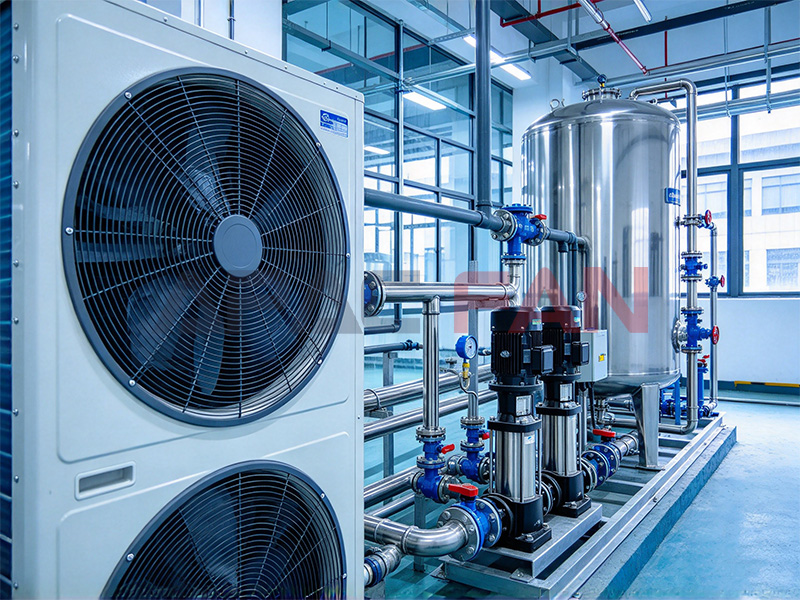
11/16/2026A heat pump water heater transfers heat from air to water. Its fan moves air across the evaporator, supporting the heat transfer process. The unit may draw from the surrounding space or use a ducted arrangement, depending on its design and installation.
The fan and the surrounding space
As the system extracts heat from the air, the surrounding space can become cooler. The heat pump water heater manufacturer specifies acceptable room temperature, clearances and any minimum space or ducting requirements. A fan replacement should maintain the intended air path through the complete unit.
If a unit is installed in an enclosed room or closet, insufficient air supply can affect operation. Check the approved installation arrangement before treating a heating performance problem as a fan fault. Do not block the inlet or discharge with stored items.
How airflow reaches the evaporator
Filters, grilles and ducts introduce resistance. Accumulated dirt or a damaged filter can affect airflow, while a ducted system may require a different operating duty from an unducted unit. Follow the appliance instructions for cleaning and inspection.
Airflow and electrical power values should be compared at the operating conditions specified for the unit. A larger free-air rating does not prove that a different fan will work correctly with the evaporator, casing or controller.
Noise and installation considerations
A fan operating near a bedroom or other occupied space can be noticeable. Sound may travel through the housing or connected ducts, and vibration can pass through the supporting structure. A change in sound can also indicate a loose panel or obstruction.
The appropriate acoustic comparison uses the same measurement type and operating point. Consider the complete appliance and its surroundings rather than relying on an isolated fan sound figure.
Preparing for a replacement
Record the water heater model, fan part number, supply voltage, connectors and mounting dimensions. Check the controller's speed command and any feedback signals. A technician should verify compatibility and test the unit after installation.
For APAC FAN product information and matching support, provide the fan label, photographs and unit details, plus your email or WhatsApp number.
How air supports water heating
A heat pump water heater uses a refrigeration circuit to transfer heat from a source of air to water stored in a tank. Air passes over the evaporator, where heat is absorbed by the refrigerant. The compressor and heat exchanger then support heat delivery to the water. The fan moves the air across the evaporator; it does not itself determine the water heater's capacity.
The equipment may include electric resistance heating or different operating modes, depending on the product. Fan behavior and operating hours can therefore vary with water demand and the selected mode. Consult the appliance documentation before drawing conclusions from a fan that is not running at a particular moment.
Room air, temperature and available space
A unit that draws air from its surroundings also cools that air as heat is extracted. Its effect on the room depends on the appliance, air exchange with adjacent spaces and the building's heating and cooling conditions. The manufacturer specifies acceptable air temperatures and installation arrangements.
A small enclosed room may not provide the required air volume unless the approved installation includes suitable openings or ducts. Blocking the specified air path with stored equipment or closing an intended transfer opening can change performance. Check the complete installation instructions before moving the unit or enclosing it.
Ducted and unducted arrangements
Some water heaters are approved for a ducted intake or discharge; others are designed to operate without ducts. The equipment documentation defines which arrangements are permitted and any limits on duct length, fittings or pressure. Added ducts can impose resistance that changes the fan's operating point.
If an appliance is moved from an open room into a ducted installation, the fan should not be changed independently as a shortcut. Verify that the complete unit and duct arrangement are approved. A larger fan may change airflow, sound, electrical requirements or controller behavior without resolving a duct design problem.
Filters, evaporators and condensate
An air filter or inlet screen helps protect the heat exchanger where provided by the manufacturer. A restricted filter can reduce airflow, and dirt on the evaporator may require professional cleaning. Follow the manufacturer's cleaning instructions and maintenance interval for the actual appliance.
Condensate produced during operation must be directed through the intended drainage arrangement. A blocked drain is a separate issue from a fan fault, although both can affect the condition of the equipment. Avoid spraying water into electrical components or using cleaning products that are not approved for the unit.
Assess sound in the occupied building
A heat pump water heater may operate for extended periods in some modes. Fan sound, compressor sound and vibration transmitted through the floor or connected ductwork all contribute to the perceived result. The time of operation and the location relative to bedrooms or work areas can affect comfort.
When comparing acoustic information, use the same measurement type, distance and operating condition. An isolated motor or fan sound value does not necessarily describe the sound level of the completed water heater. Address loose panels or inappropriate mounting through the manufacturer's service procedure before considering a fan change.
Gather information for replacement
Record the water heater's full model and serial details, the fan part number, mounting dimensions, electrical supply and connector arrangement. Where the unit uses a control signal or reports fan speed, those functions must be preserved. A fan that fits the housing and turns on may still provide the wrong airflow through the evaporator.
A qualified technician should diagnose the fault, install the replacement and verify operation according to the appliance instructions. APAC FAN can review the information you provide and help identify fan specifications for a suitable replacement discussion.
Assessing hot water demand and fan operation
The fan's schedule depends partly on when the heat pump section is operating. Hot water use, tank temperature, ambient air conditions and the selected operating mode can all influence that schedule. Some appliances can use supplemental electric heating, so a change in hot water recovery is not automatically evidence of a defective fan.
For troubleshooting, record the appliance mode, the timing of hot water demand and any displayed alarms. A technician can compare these observations with the manufacturer's sequence. This context helps distinguish a normal operating choice from a restriction, control fault or component failure that requires service.