

















 English
 Français
 Deutsch
 Português
 Español
 русский
  한국어
한국어 العربية
 Italiano
 Indonesia
 Schweiz
 Polski
 Nederlands
 ישראל - עברית
 Perzisch
 ไทย
ไทย 日本語
日本語 ኢትዮ-አማርኛ
 Việt Nam
 Kiswahili
 Srpski
 Ελληνικά
 繁體中文
繁體中文Precision Cooling Fans for Museums and Archives
09/18/2026Collections Need Stability, Not Just Comfort
Museums, archives, libraries, and collection stores protect materials that can respond slowly but permanently to environmental change. Paper, textiles, wood, paintings, photographs, film, metals, and composite objects have different sensitivities, yet all benefit from controlled conditions and avoidance of rapid fluctuations.
Precision cooling fans help maintain uniform temperature and humidity by circulating conditioned air continuously or according to a carefully controlled schedule. Their role differs from ordinary comfort HVAC because the collection remains in the room when visitors and staff leave.
Gentle and Uniform Air Distribution
High-velocity air directed at an object can create local drying, movement of lightweight materials, dust deposition, or a microclimate different from the room average. Supply devices and fan speeds should distribute air gently across the space rather than creating strong jets toward exhibits or shelving.
Return-air placement is equally important. Air should pass through the occupied storage volume without leaving stagnant corners behind dense shelving, cabinets, or display cases. Sensors can reveal whether average room conditions hide local variation.
Humidity Control and Air Mixing
The fan carries air across cooling, heating, humidification, and dehumidification components. Stable mixing helps these processes affect the whole zone and gives the controller representative feedback. Excessive fan cycling can allow local humidity differences to develop even when the central sensor remains within range.
Minimum airflow should be established for environmental uniformity, but unnecessary maximum-speed operation can increase noise, dust movement, and energy use. Variable operation must be slow and stable enough to avoid rapid environmental changes.
Filtration and Cleanliness
Filtration reduces airborne dust and particles that can soil surfaces or react with collection materials. Higher-efficiency filters create additional resistance, so the fan must be selected for both clean and loaded conditions. Filter bypass at poorly sealed frames can undermine the intended protection.
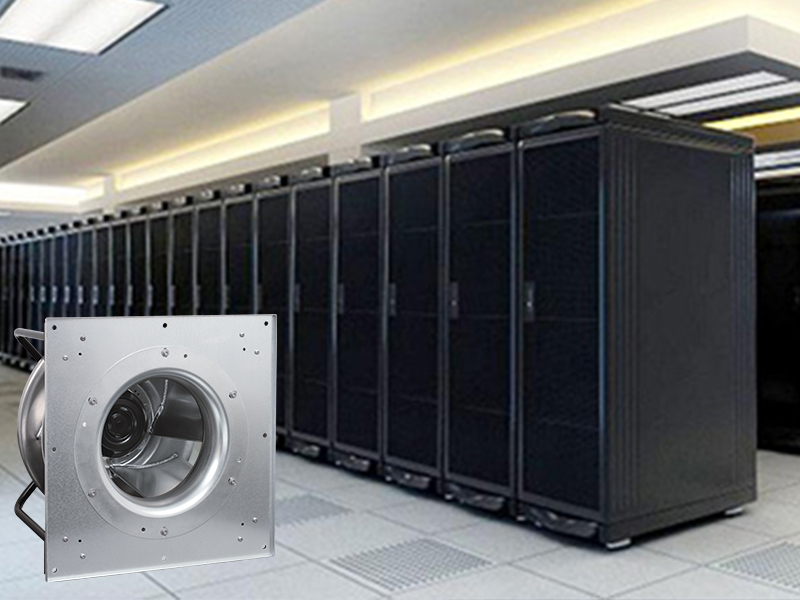
Fan materials, belts, lubricants, insulation, and internal finishes should be reviewed for particle shedding and odors where collections are sensitive. Direct-drive arrangements can remove belt dust and reduce routine adjustment.
Vibration, Sound, and Reliability
Fan vibration can transmit through floors, ducts, shelving, or exhibit structures. Sensitive instruments, framed works, or fragile objects may require low-vibration equipment and carefully designed isolation. In public galleries, tonal noise can also affect visitor experience.
Reliability matters because an environmental excursion may damage collections before replacement equipment is available. Alarm monitoring, spare-part planning, redundant cooling capacity where justified, and service access should be part of the preservation plan.
Selecting a Collection-Safe System
The design team should map collection sensitivities, room geometry, shelving density, acceptable temperature and humidity ranges, filtration, operating hours, sound criteria, and emergency procedures. Fan selection then follows the required airflow, pressure, control range, cleanliness, and reliability.
A successful museum or archive system is unobtrusive: it moves enough air to keep conditions uniform without exposing collections to drafts, vibration, contamination, or abrupt change.
Conclusion
Museum and archive airflow should protect collections quietly and gently. Uniformity, filtration, low vibration, dependable controls, and long-term service support are central selection criteria.