

















 English
 Français
 Deutsch
 Português
 Español
 русский
  한국어
한국어 العربية
 Italiano
 Indonesia
 Schweiz
 Polski
 Nederlands
 ישראל - עברית
 Perzisch
 ไทย
ไทย 日本語
日本語 ኢትዮ-አማርኛ
 Việt Nam
 Kiswahili
 Srpski
 Ελληνικά
 繁體中文
繁體中文EC Fans for Cooling Towers and Variable Airflow Operation
09/23/2026Why variable airflow suits cooling towers
Cooling towers rarely operate at one fixed duty throughout the year. Heat load changes with production, building occupancy, chiller operation, and weather. Wet-bulb temperature also changes the amount of airflow needed to reach the target leaving-water temperature. A fan that can vary its speed allows the controller to reduce air volume when full capacity is unnecessary and increase it when thermal demand rises.
What an EC fan changes
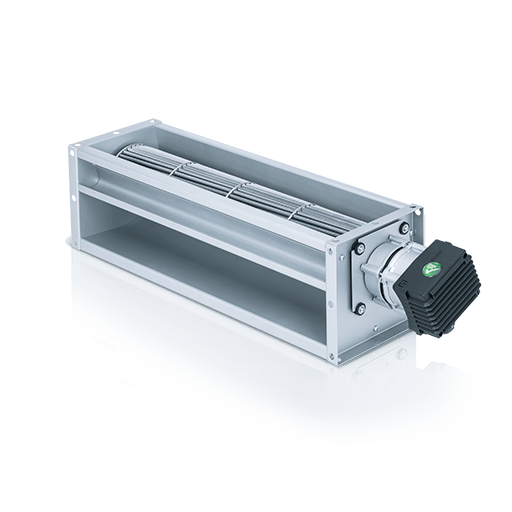
An electronically commutated fan combines a permanent-magnet motor with electronic commutation and speed-control functions. In suitable cooling tower applications, this integrated arrangement can simplify variable-speed operation because the motor electronics regulate speed in response to an accepted control input. The exact functions depend on the product. Engineers should confirm the voltage, input limits, control interface, protection functions, environmental rating, and communication options in the technical documentation for the selected fan.
Part-load energy behavior
Fan power falls rapidly as speed is reduced in systems where the affinity laws apply reasonably well. Airflow is approximately proportional to speed, pressure varies roughly with the square of speed, and power varies roughly with the cube of speed. These relationships are idealized and the installed system will differ, but they explain why modest speed reductions can produce meaningful power savings. The operating point must still provide enough airflow to maintain the required water temperature.
Control by water temperature
A common approach is to vary fan speed from a condenser-water or process-water temperature signal. The controller compares the measured temperature with a setpoint and adjusts fan output. Stable control requires appropriate sensor placement, a sensible control band, minimum and maximum speed limits, and protection against rapid hunting. In a multi-cell tower, the sequence should also consider water distribution and equal use of cells rather than driving one fan hard while leaving other available heat-transfer area unused.
Benefits of integrated speed control
Integrated EC control can remove the need to match a separate variable-frequency drive to a conventional motor in some installations. It may also provide status or alarm outputs and, where supported, digital communication. These features can help operators see whether the fan is available and how it is being commanded. They do not replace the need for tower-level safeties, sensor validation, electrical protection, and a control strategy suited to the plant.
Using ebm-papst EC fans
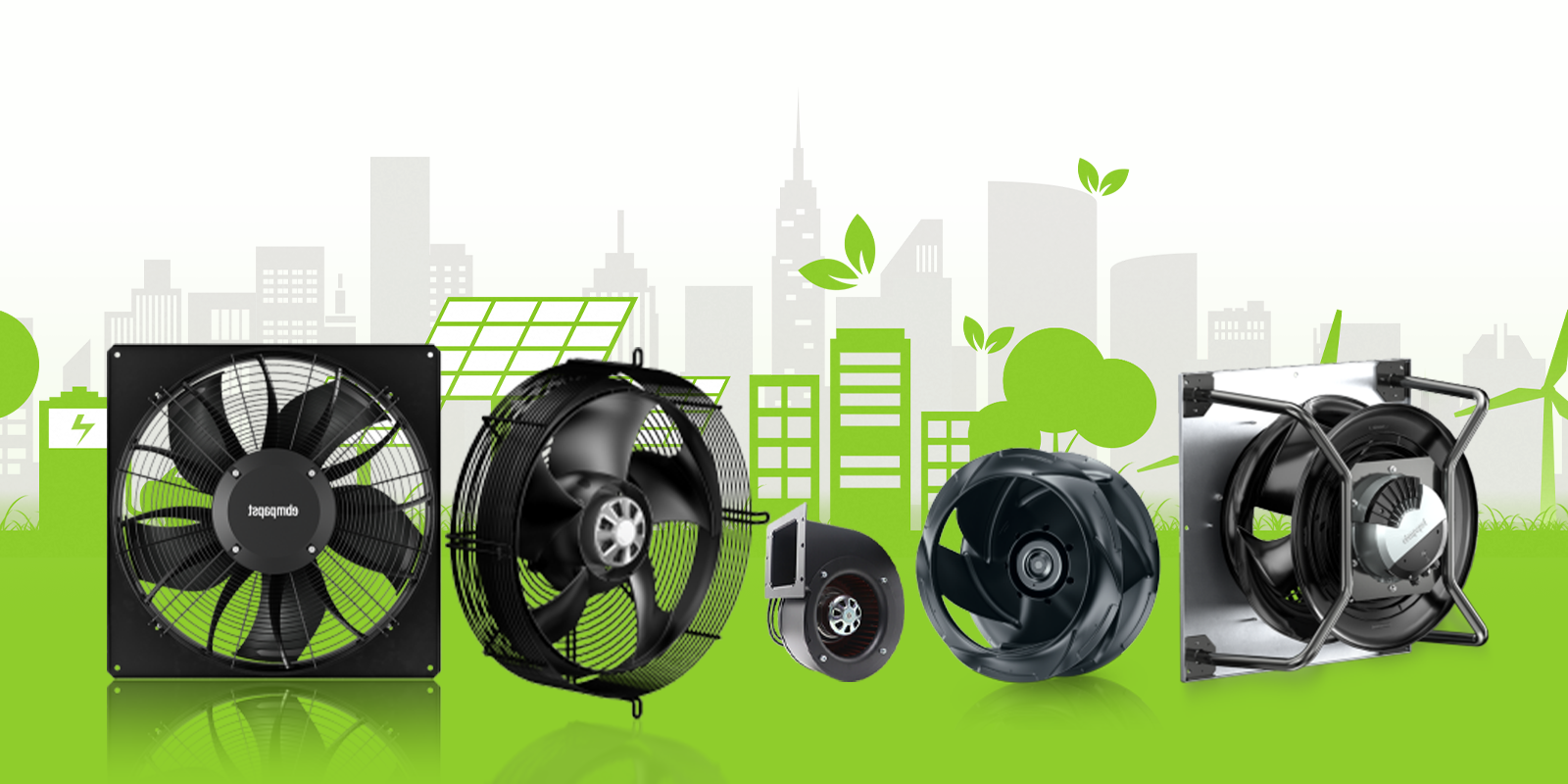
ebm-papst offers EC fan technologies across a range of air-moving applications. When considering an ebm-papst fan for a cooling tower, selection should be based on the exact airflow and pressure duty, permitted environment, mounting geometry, electrical supply, and control interface. Product suitability must be verified for the location, especially where the fan may be exposed to continuous humidity, water droplets, aggressive cleaning agents, salt, or elevated air temperature.
New installations and retrofit projects
A new tower can be designed around the fan dimensions, airflow path, electrical distribution, and control system. A retrofit has tighter constraints. The replacement must fit the existing opening and structure, and the controller may need new signals or wiring. The proposed fan curve should be checked against the estimated tower resistance, and the retrofit plan should include mounting details, guards, drainage, cable routing, isolation, and commissioning tests.
When EC is not a drop-in decision
An EC fan should not be selected solely because variable speed is desirable. Large tower duties, unusual voltage systems, high mechanical loads, aggressive environments, or specific certification requirements may call for another arrangement. Lifecycle evaluation should include purchase cost, expected operating hours, load profile, access for replacement, controller integration, and the availability of a suitable performance point.
Conclusion
EC fans can support efficient, responsive cooling tower operation when the fan is correctly matched to the tower and the controls follow actual cooling demand. The strongest projects combine verified fan performance with a clear electrical design, an appropriate environmental specification, and a commissioning plan that confirms water temperature, airflow response, alarms, and power use.