

















 English
 Français
 Deutsch
 Português
 Español
 русский
  한국어
한국어 العربية
 Italiano
 Indonesia
 Schweiz
 Polski
 Nederlands
 ישראל - עברית
 Perzisch
 ไทย
ไทย 日本語
日本語 ኢትዮ-አማርኛ
 Việt Nam
 Kiswahili
 Srpski
 Ελληνικά
 繁體中文
繁體中文Axial Fans in Cooling Tower Applications
09/24/2026Why axial fans are common in cooling towers
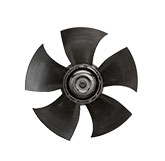
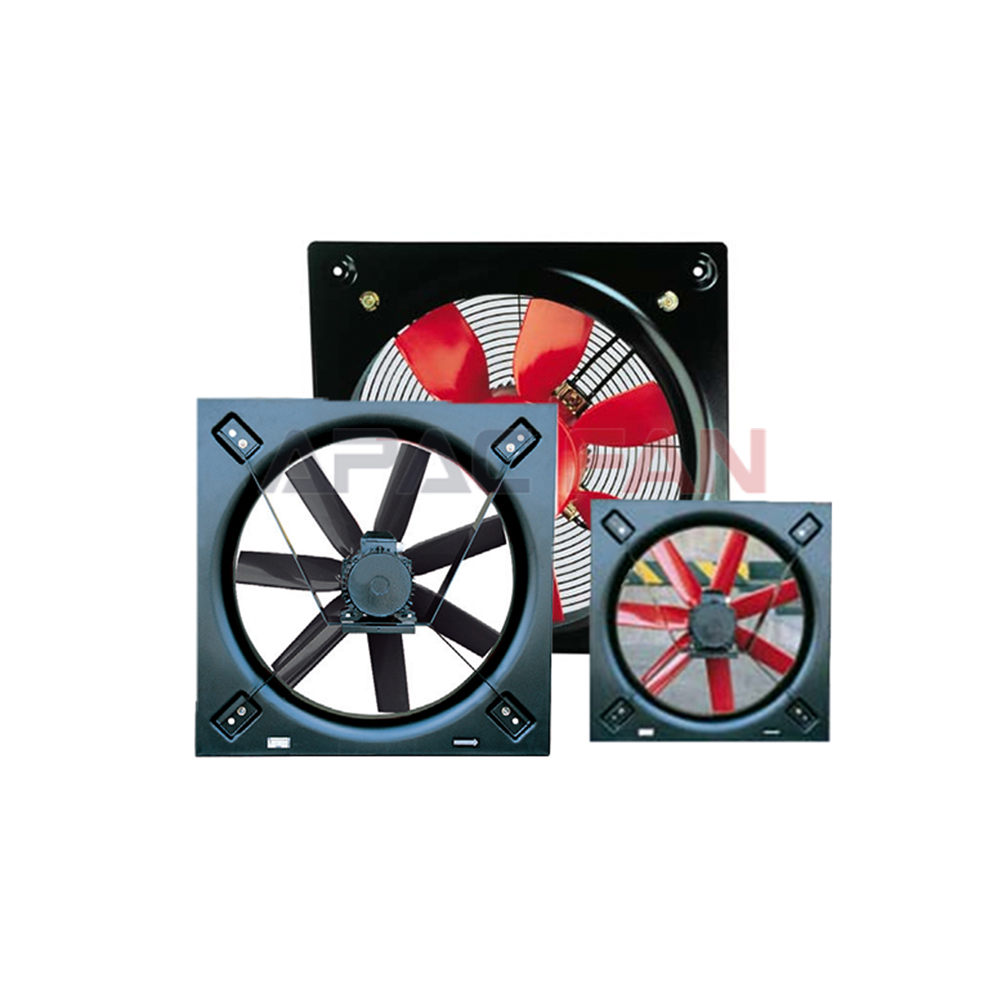
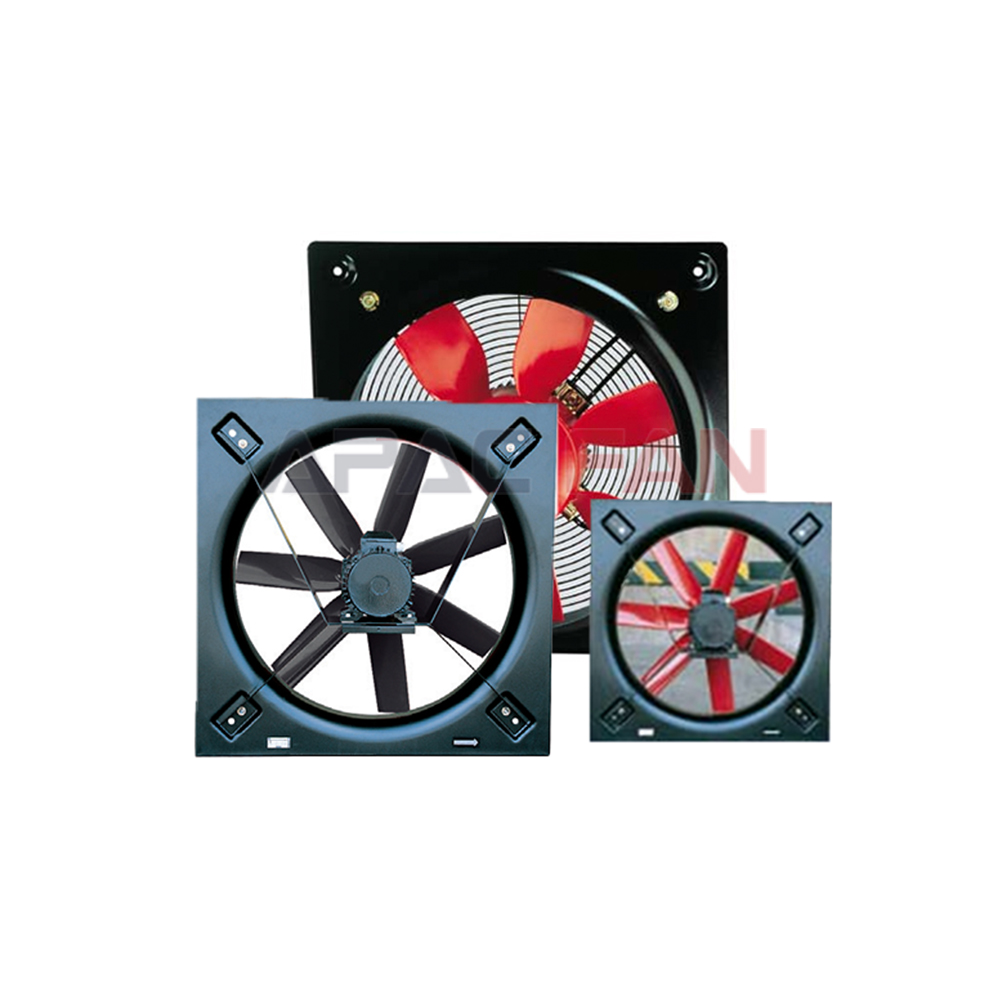
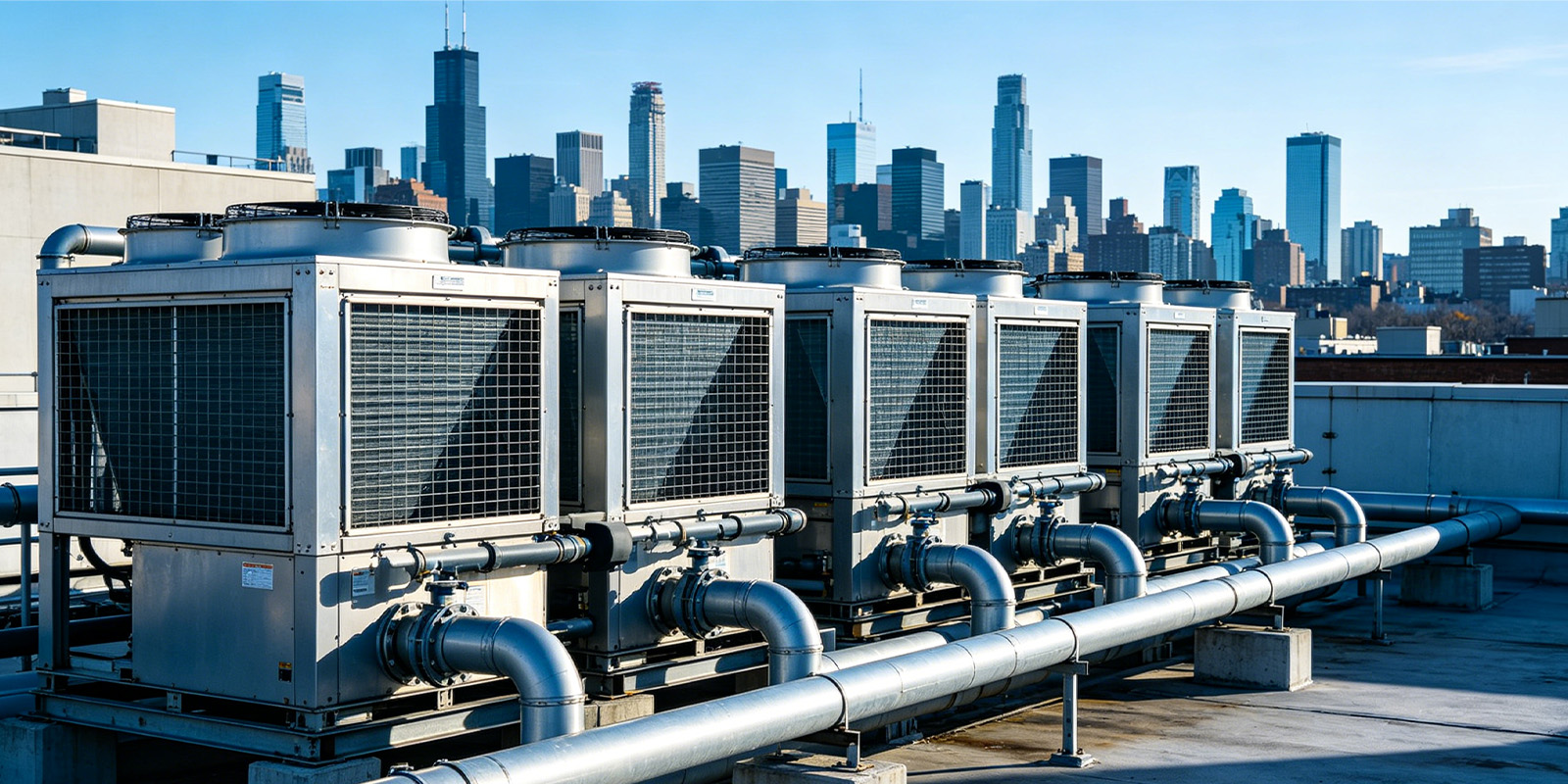
Cooling towers usually need a large volume of air to pass through a comparatively broad cross-section. Axial fans move air generally parallel to the shaft, making them well suited to straight-through tower airflow paths. Their compact depth relative to diameter can also fit roof-mounted discharge sections and packaged cooling equipment. Suitability still depends on the required pressure, because fill, eliminators, louvers, guards, and discharge geometry impose resistance.
How an axial fan develops pressure
Rotating blades add energy to the air and create a pressure rise that moves the flow through the tower. Blade angle, chord, profile, hub ratio, diameter, tip clearance, and rotational speed all influence performance. The fan ring and inlet shape also matter. A poorly matched ring or an uneven inlet can cause separation, recirculation, extra noise, and lower airflow even when the impeller and motor are operating normally.
Reading the performance curve
Selection should use the operating curve for the exact impeller, motor, speed, and airflow direction. The intersection between the fan curve and the tower resistance curve defines the operating point. Confirm whether published pressure is static, dynamic, or total pressure and whether accessories are included in the test configuration. Also check input power and current at the selected point, because the motor must remain within its permitted load across the expected operating range.
Diameter and rotational speed
A larger fan can often deliver a given airflow at a lower rotational speed than a smaller fan, subject to space and structural limits. Lower tip speed may reduce aerodynamic noise, but diameter alone does not determine sound or efficiency. Blade design, loading, inflow quality, support geometry, and control strategy remain important. Replacement work should preserve suitable tip clearance and avoid forcing an impeller into a ring that was not designed for it.
Motor configurations
Cooling tower axial fans may use direct-drive or mechanically driven arrangements. A direct-drive assembly can reduce the number of rotating mechanical components, while other tower designs use shafts, gearboxes, or belt systems to position the motor away from the air stream or achieve the required speed. The correct configuration depends on tower size and design. For a direct-drive replacement, verify fan weight, center of gravity, bolt pattern, cable position, airflow direction, and access for service.
Noise and vibration
Axial fan noise includes blade-passing components, broadband aerodynamic noise, motor noise, and structural transmission. Obstructed inlets, distorted flow, damaged blades, incorrect clearance, and operation near an unstable region can increase noise. Vibration may come from imbalance, loosened supports, bearing wear, shaft problems, or tower resonance. A quieter fan cannot compensate for a flexible or damaged support structure, so mechanical inspection should accompany fan replacement.
Environmental exposure
Cooling tower air can contain high moisture levels and entrained droplets. Depending on the site, it may also contain salt, industrial contaminants, treatment chemicals, dust, or biological material. Materials, coatings, seals, fasteners, connectors, and cables should suit the actual environment. Confirm the permitted ambient and media temperature, ingress protection, corrosion protection, and installation orientation from the product documentation.
Replacement selection
Record the duty point, opening dimensions, fan ring, blade-to-ring clearance, airflow direction, electrical supply, control method, sound requirement, and support arrangement. If the existing fan underperforms, determine whether the cause is the fan, increased tower resistance, recirculation, or degraded fill. ebm-papst axial fan solutions may be considered where an exact product meets these conditions, but brand familiarity should never replace curve verification and installation review.
Conclusion
Axial fans suit many cooling towers because they can move high air volumes through a direct path. Their installed result depends on more than the impeller. Performance curves, pressure, ring geometry, clear inlet and outlet conditions, motor loading, structural support, environmental protection, and control all need to be evaluated together.