















 English
 Français
 Deutsch
 Português
 Español
 русский
  한국어
한국어 العربية
 Italiano
 Indonesia
 Schweiz
 Polski
 Nederlands
 ישראל - עברית
 Perzisch
 ไทย
ไทย 日本語
日本語 ኢትዮ-አማርኛ
 Việt Nam
 Kiswahili
 Srpski
 Ελληνικά
 繁體中文
繁體中文How Cooling Tower Fan Performance Affects HVAC Efficiency
10/08/2026The cooling tower in a water cooled HVAC plant
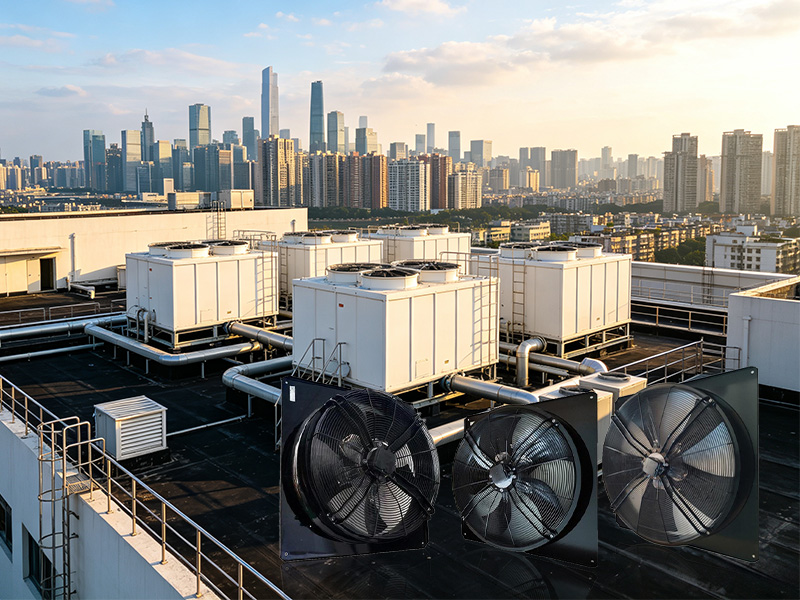
A water-cooled chiller transfers building heat to the condenser-water loop. The cooling tower then rejects that heat to the outdoor air. The fan controls air movement through the tower and therefore affects how effectively the condenser water can be cooled. Because the chiller and tower are connected, fan performance influences more than the tower's own energy use.
Airflow and condenser water temperature
When fan airflow is too low for the heat load and weather condition, the leaving condenser-water temperature rises. The chiller must then reject heat at a higher condensing temperature, which can increase compressor power and reduce available capacity. Severe conditions may trigger high-pressure limits. Adequate tower airflow helps maintain the condenser-water target, but pushing the water colder than the chiller requires may consume unnecessary fan energy.
Find the plant level balance
The lowest fan power does not always produce the lowest total HVAC power. Reducing fan speed saves tower energy but may increase chiller energy if condenser water warms. Conversely, running every fan at full speed may reduce chiller lift while wasting tower power. Control should seek a practical balance based on chiller characteristics, fan curves, ambient wet-bulb temperature, load, and operating constraints.
Consequences of poor fan system matching
A fan selected without sufficient pressure may deliver less airflow than expected after installation. An oversized fan may require permanent speed limitation or produce excessive noise. Poor inlet and outlet conditions can move the operating point away from the catalog prediction. These problems can appear as unstable water temperature, long fan run hours, high current, vibration, or a tower that fails to reach its expected approach.
Part load operation
Commercial HVAC plants spend substantial time below design load. Variable-speed fans allow the tower to reduce power during these periods while maintaining the condenser-water setpoint. In multi-cell installations, the controller may spread airflow across available cells or stage cells according to water flow and load. The preferred method should be validated using total plant power and temperature data.
Maintenance affects HVAC efficiency
Fouled fill, blocked strainers, damaged eliminators, poor nozzle distribution, scale, biological growth, and obstructed air inlets reduce tower performance. A fan may respond by running faster for longer, increasing energy while masking the underlying problem. Routine inspection should therefore include both the fan system and the heat-transfer components. Trend data can reveal a gradual loss of performance before comfort or chiller alarms are affected.
Selecting fans for HVAC towers
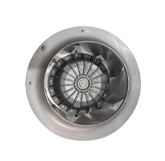
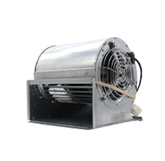
Selection should use design airflow, pressure, wet-bulb condition, tower dimensions, electrical supply, control interface, sound limits, and environmental exposure. The fan curve must cover both peak and part-load operation. Where a suitable configuration exists, an ebm-papst EC fan can be considered for integrated variable-speed operation. The exact product must be checked for the required duty, installation, protection, and control functions.
Retrofit opportunities
A retrofit may combine fan replacement with improved controls, repaired air seals, restored fill, corrected water distribution, and sensor upgrades. Before investing, log condenser-water temperatures, fan speed or status, fan power, wet-bulb temperature, chiller load, and chiller power. This establishes a baseline and helps identify whether the main constraint lies in airflow, heat transfer, controls, or the connected chiller.
Conclusion
Cooling tower fan performance affects condenser-water temperature and therefore the operating conditions seen by the chiller. HVAC efficiency improves when the fan delivers the required airflow at the real system pressure, the tower remains clean and well distributed, and variable-speed control minimizes total plant power rather than fan power alone.